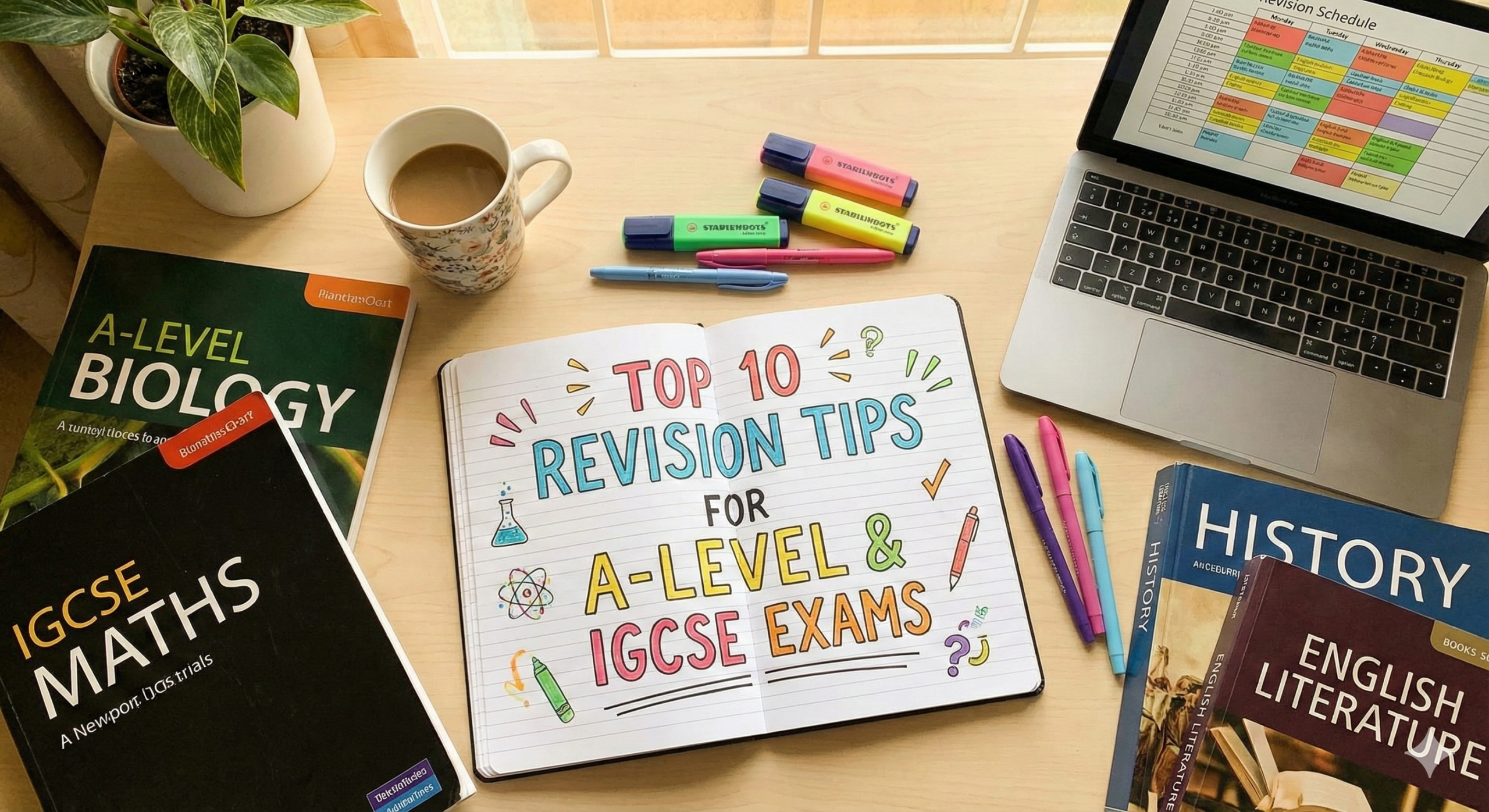
Preparing for A-Level and IGCSE exams seems very tough, especially when you don’t know where to begin. Students often look for reliable guidance, including tips for O-level and IGCSE exams or effective top tips for A-level revision.
In this guide, you’ll discover how to revise for IGCSE exams or how to revise for A-Level exams. All the tips are designed to boost your confidence and performance in exams.
You can get helpful suggestions on how to stay focused and reduce stress during your exams. Learn how to organize effective study time, active recall, and practice paper strategies. If you’re planning for consistent and meaningful progress, you’re in the right place.
Here are the Top 10 Revision Tips for A-Level and IGCSE Exams:
1. Create a Realistic Revision Plan
Plan a study in such a way that tough subjects get more time. This helps manage workload and reduces anxiety, especially for students seeking success. For example, if mathematics requires more focus, assign extra study blocks compared to subjects you find easier.
2. Familiar with Exam Format and Syllabus
Familiarize yourself with the format of the exams, questions, and content to expect in each subject. Reviewing the syllabus ensures complete coverage and reduces stress, which is especially helpful when applying IGCSE tips and tricks to streamline your approach.
3. Utilize Active Recall
Prove yourself rather than study notes. Flashcards and untimed or timed past-paper attempts all work well. These methods improve memory retention and align perfectly with proven top tips for A-Level revision that boost long-term recall.
4. Apply Spaced Repetition
Revisit topics at increasing intervals to reinforce learning just before it fades. Techniques like the 2-3-5-7 rule or digital apps can keep you consistent. This approach is particularly effective for learners following structured tips for O-level students who want steady progress.
5. Practice with Past Papers
Use timed past-paper sessions to understand exam format, spot common question types, and improve time management. Review your mistakes to identify weak areas, an essential habit when following O Level tips to raise exam performance.
6. Use Visual Aids and Dual Coding
Mind maps, diagrams, and flowcharts make complex material easier to digest. Combining visuals with notes improves recall, especially for visual learners. This method pairs well with general IGCSE exam tips for clearer, more organized revision.
7. Engage in Group Study Sessions
Collaborate with classmates to clarify concepts and fill knowledge gaps. Teaching others reinforces your own understanding and boosts confidence. This approach aligns well with practical O Level tips and tricks that encourage interactive learning.
8. Take Regular Breaks
Use short, frequent breaks to prevent burnout and keep your mind sharp. The Pomodoro Technique, 25 minutes of work followed by a 5-minute break, helps maintain focus. It also fits naturally into strategic revision tips for A Levels used by high-achieving students.
9. Maintain a Healthy Lifestyle and Mindset
Consistency comes from balanced sleep, movement, nutrition, and mental well-being. Track progress, set achievable goals, and reward yourself for meeting study targets. These habits complement structured tips for A-Level & IGCSE exams that support top performance.
10. Strengthen Your Revision Strategy
Use a combination of reading, note-making, self-testing, and summarizing to reinforce learning. Switching techniques keeps revision fresh and supports learners applying IGCSE revision tips for more effective study sessions.
Top Websites for A-level and IGCSE Past Papers and Mark Schemes
Students often rely on trusted platforms for past papers and mark schemes to sharpen exam technique, especially when looking for tips for A-level, O-level, and IGCSE that complement structured practice resources.
Papacambridge.com
Papacambridge offers updated past papers for CAIE IGCSE, AS, and A Levels, including the latest May/June and Oct/Nov series. It’s consistently refreshed with older archives as well, making it a strong resource for students seeking IGCSE tips and tricks while preparing systematically.
Pearson (Edexcel)
Pearson’s search tool provides extensive access to Edexcel past papers and mark schemes. While the newest papers remain center-restricted, older materials are open to all. Ideal for learners applying top tips for A-level revision and reviewing examiner-approved content.
Tutopiya.com
Tutopiya hosts thousands of Cambridge, Edexcel, and AQA past papers with open downloads, mark schemes, mock exams, and planning tools. It supports multi-subject study and suits learners building consistency.
CaieFinder.com
CaieFinder specializes in searchable O Level, A Level, and IGCSE questions, letting users locate answers by entering key phrases. This targeted approach aligns well with structured O-level tips focused on question-type mastery.
AQA.org.uk
AQA provides past papers and mark schemes across core subjects, along with administration guidance and assessment timelines. This centralized access helps students applying for the IGCSE exam tips refine their exam-specific strategies.
Exam-mate.com
Exam-mate organizes past questions by topic for IGCSE, IB, SAT, and more, supported by AI-guided solutions and mock-exam builders. Its topical focus suits learners following O-level tips and tricks to strengthen weak areas efficiently.
How The Brilliant Brains Can Help in A-Level & IGCSE Exam Preparation
Students across Qatar, the UAE, Saudi Arabia, Kuwait, and Pakistan rely on The Brilliant Brains for steady academic support during A-Level and IGCSE study periods.
- Our online sessions focus on concept clarity, guided practice, and exam-style problem solving.
- Tutors break down tough topics, offer structured study paths, and help learners apply exam preparation strategies that lead to stronger grades.
- We offer live classes, past-paper guidance, and weekly progress tracking to give learners the consistency required for exam growth.
Final Words
For effective A-Level and IGCSE exam preparation, it combines structured planning, active revision techniques, and consistent practice. Start building your revision schedule today, integrate these proven methods, and take charge of your exam success.
Frequently Asked Questions (FAQs)
1. What are the most effective study techniques for A-Level and IGCSE exams?
Active recall, spaced repetition, and regular past-paper practice work extremely well. Students in the Middle East often combine these techniques with short review blocks after school hours. Mixing active learning with visual tools helps strengthen understanding across subjects.
2. How can I create a revision timetable for A-Level and IGCSE subjects?
List all subjects, mark topics that need deeper study, and spread them across weekly slots. Add flexible blocks for revision during weekends. Keep the timetable balanced so progress stays steady throughout the month.
3. What resources are recommended for A-Level and IGCSE exam preparation?
Past papers from official exam boards, topic summaries, question banks, teacher-approved revision guides, and digital flashcard tools all support structured revision. Many Middle Eastern schools also offer extra worksheets and exam clinics.
4. How do I manage stress during A-Level and IGCSE revision periods?
Take short breaks, rotate subjects to avoid mental tiredness, and set small goals for each session. Light exercise, proper rest, and supportive routines at home help maintain calmness during busy revision weeks.
5. What common mistakes should I avoid while revising for A-Level and IGCSE exams?
Avoid reading notes passively, skipping past papers, and studying long hours without breaks. Many students also rush through topics instead of reviewing them again after a few days. Consistency is more effective than long, unfocused sessions.