AI in Education: How AI Is Transforming Tutoring, Learning, and EdTech in 2026
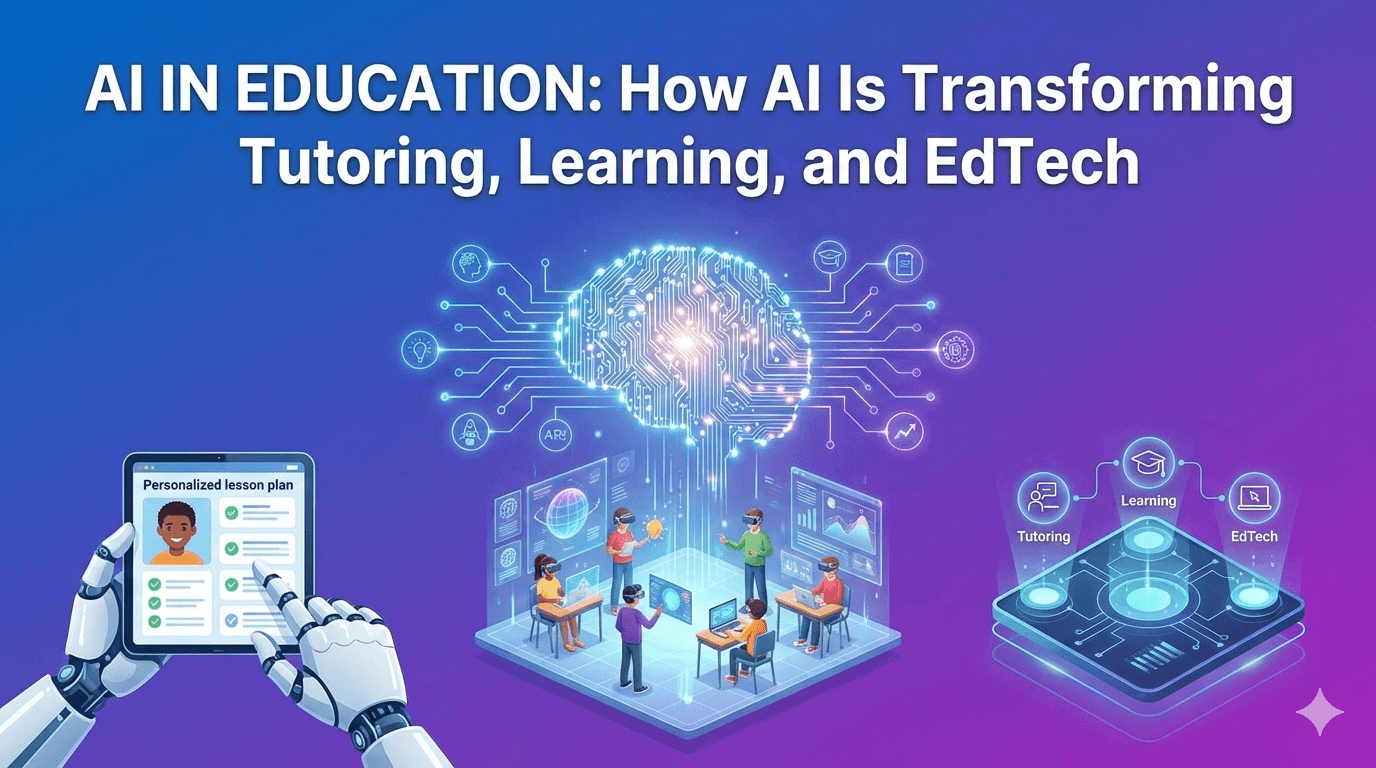
Struggling to help your child or students learn effectively in a crowded classroom or online environment? Many parents and educators feel overwhelmed by the task of tracking progress, providing personalized guidance, and preparing students for exams.
Studies show that students who receive tailored learning experiences are up to 30% more likely to perform better on assessments. But creating personalized learning for every student is nearly impossible without technology.
With the rise of AI in education, tools can now analyze performance, identify weak areas, and deliver adaptive lessons that adjust to each student’s pace. From SAT prep to IGCSE, AI tutoring is transforming how students learn and how educators teach.
By the end of this article, you’ll understand how AI-powered tutoring systems improve outcomes, how to choose the right tools, and how to integrate AI responsibly for maximum impact.
AI in Tutoring vs Human Tutors
AI will not replace human tutors, but it will replace inefficient tutoring methods. AI in education isn’t about choosing between humans and machines; it’s about redefining what each does best and removing guesswork from learning.
What AI Can Do Better Than Human Tutors
AI excels at tasks that require speed, pattern recognition, and consistency. These areas are where even the best tutors have limits.
- Instant diagnosis of learning gaps: AI analyzes accuracy, speed, retry patterns, and topic-level mistakes in real time.
- Unlimited, judgement-free practice: Students can repeat concepts without pressure or embarrassment.
- Adaptive pacing: AI adjusts difficulty dynamically, preventing boredom for strong students and overwhelm for struggling ones.
This is where AI tutoring tools outperform traditional models, not because they are “smarter”, but because they never rely on intuition alone.
What Human Tutors Still Do Better
There are critical areas AI cannot replace, at least not meaningfully.
- Motivation and accountability: AI can remind; humans inspire.
- Emotional intelligence: Detecting frustration, burnout, or confidence loss still requires human judgment.
- Complex reasoning and context: Essays, problem-solving strategies, and exam mindset coaching benefit from lived experience.
This is why pure AI tutoring often plateaus after initial gains.
The Most Effective Model: AI + Human Tutor Hybrid Learning
The strongest results come from hybrid systems where AI-powered tutoring systems handle diagnostics and repetition. While tutors focus on strategy, mindset, and higher-order thinking.
A simple way to think about it:
- AI answers: What should the student study next?
- Tutors answer: Why this matters and how to approach it.
This division of labor is one of the clearest benefits of AI in education, as it results in better outcomes without increasing cognitive load.
How AI Uses Data to Improve Student Outcomes
AI in education has shifted from novelty to necessity. The key advantage of AI tutoring tools lies not in flashy features, but in their ability to track and analyze student data over time. By continuously monitoring performance, AI identifies learning gaps, predicts areas of struggle, and provides personalized roadmap for improvement.
Over time, these insights allow tutors and institutions to focus on interventions that truly matter. Instead of repeating ineffective lessons or one-size-fits-all exercises. Students receive feedback in real time, enabling micro-adjustments that compound into better outcomes.
What Learning Data AI Analyzes
- Accuracy and completion rates
- Time spent per question or topic
- Patterns of mistakes and retries
- Progress across skill levels
- Engagement metrics (logins, session frequency)
What AI Should Never Track
- Social interactions unrelated to learning
- Health data or private content
- Anything beyond learning needs
Responsible AI-powered tutoring systems balance insights with privacy. Parents and institutions must ensure platforms follow strict guidelines.
AI-Powered Exam Preparation: From Practice to Performance
Traditional study methods often leave students guessing what to focus on. Mostly wasting time on content they already know or struggling with concepts without guidance.
AI-powered tutoring systems solve this problem by integrating predictive analytics. AI can forecast which topics are likely to appear on exams or cause difficulty. This way helps learners focus where it matters most.
How AI Personalizes Exam Prep for SAT, IGCSE, and IB
AI tutoring for standardized and competitive exams goes far beyond question banks. Here’s how it works:
- Adaptive Practice Paths: AI adjusts question difficulty based on student performance, ensuring mastery before advancing.
- Targeted Weak Spot Identification: Tracks accuracy, response time, and common errors to pinpoint specific topics needing extra focus.
- Real-Time Feedback: Provides instant hints, explanations, and recommended revisions, reducing wasted study time.
- Simulated Exam Experience: Creates practice tests tailored to the style and format of the SAT, IGCSE, IB, or other competitive tests.
- Performance Analytics: Shows trends over time, highlighting improvement and remaining gaps, helping students optimize study schedules.
For students preparing for high-stakes exams, AI tutoring tools don’t replace effort; they amplify effectiveness, turning hours of study into measurable performance gains.
How to Choose the Right AI Tutoring Platform for Your Child
Choosing the right AI tutoring platform is less about brand names and more about learning outcomes, safety, and long‑term fit. With the rapid expansion of AI in education, many tools look impressive on the surface. For example: polished UIs, marketing promises, and flashy features. But don’t deliver on genuine learning improvement or ethical standards.
Before committing time or budget, focus on platforms that deliver measurable value. Integrate well with existing systems, support teachers as facilitators (rather than replacements), and protect student data.
Red Flags to Avoid in AI Education Tools
When evaluating AI tutoring tools, it’s just as important to know what to avoid:
- Tools giving answers without explanations
- Lack of transparency in data protection
- Entertainment-focused or generic AI chatbots
- Missing safeguards for younger learners
Questions to Ask Before Investing in AI Tutoring
To make an informed decision, ask every vendor these critical questions:
- How does the system personalize learning?
- Does it use performance data to adapt lessons?
- How does it evolve as the student progresses?
- What evidence supports learning improvement?
- Are there case studies, studies, or measurable outcomes?
- How is student data stored and protected?
- Does the platform comply with privacy laws like FERPA or GDPR?
- What training and support do you provide?
- Are there educator resources, onboarding, and ongoing assistance?
- How does the system support teachers or tutors?
- Can instructors review analytics, customize content, or intervene as needed
Final Thoughts
AI is reshaping education by making learning more personalized, adaptive, and effective. AI tutoring tools and AI-powered tutoring systems help students learn smarter, teachers teach more efficiently, and schools stay ahead.
To truly benefit, focus on platforms that combine AI insights with human guidance. This approach maximizes outcomes while keeping learning safe, engaging, and future-ready. The future of tutoring with AI is here, and those who adopt it thoughtfully will see students achieve their full potential.
Need an Expert Tutor for Online Learning?
Explore The Brilliant Brains and connect with qualified tutors, or consider personalized tutoring plans that prioritize individual learning needs.
FAQs
Can AI replace human tutors?
AI cannot fully replace human tutors. AI excels at personalized practice, instant feedback, and data-driven insights.
Is AI safe to use in education?
AI can be safe in education when platforms follow strong data privacy standards, use transparent algorithms, and limit data collection.
Can AI be biased in education?
Yes, AI can show bias if trained on incomplete or unbalanced data. In education, this may affect recommendations or assessments.
What should parents look for in AI tutoring tools?
Transparency, human tutor support, and the ability to adapt learning paths are key indicators of an effective AI-powered tutoring system.
What is the future of tutoring with AI?
The future of tutoring with AI includes more personalized learning, real-time feedback, and hybrid models where AI supports human tutors.
What skills do students need to learn to work effectively with AI?
Students need skills such as self-regulation, critical thinking, digital literacy, and the ability to interpret feedback.