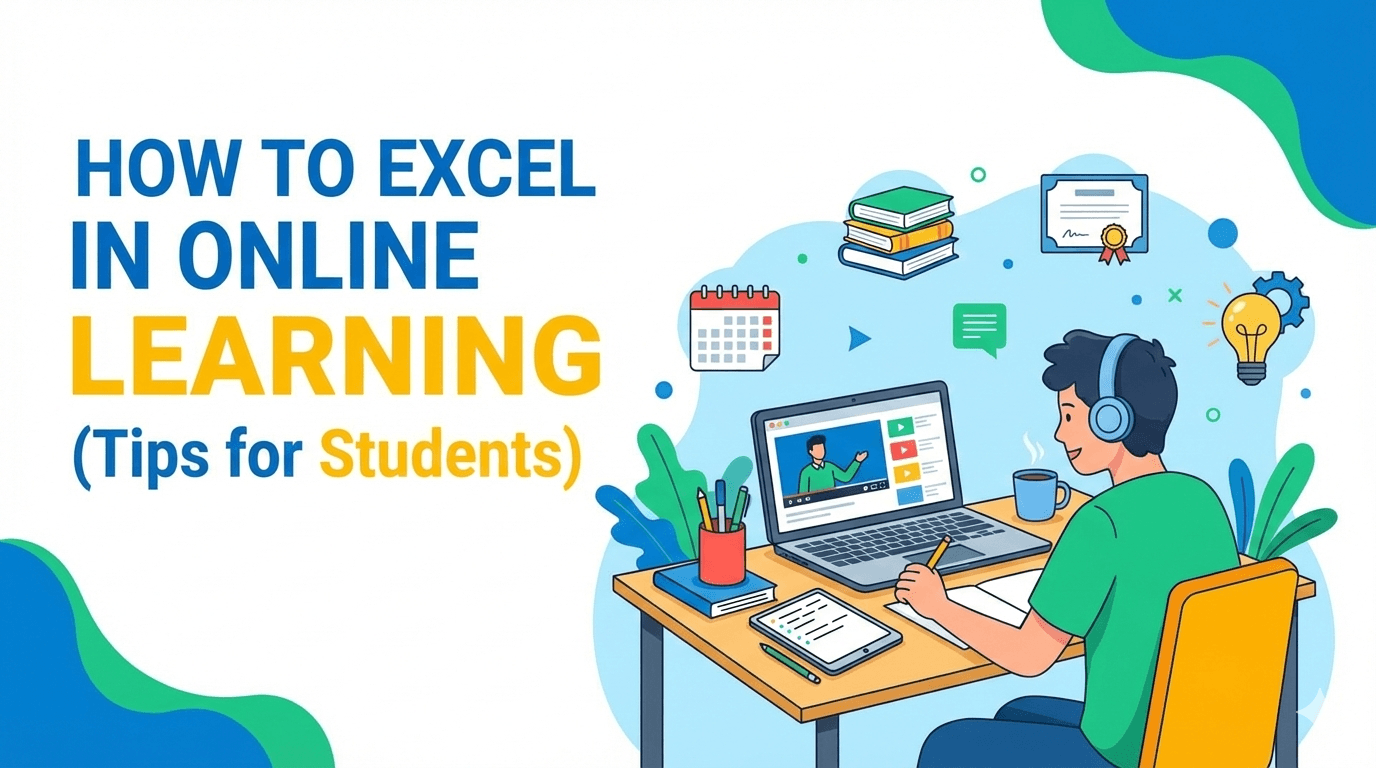
How to Excel in Online Learning (Tips for Students)
Online education has reshaped how students across the world study, revise, and prepare for exams from home. Recent regional education reports show a steady rise in digital classrooms, recorded lessons, and virtual assessments across international and local curricula.
Many students now spend several hours each day learning through screens. Some adapt quickly, while others struggle with focus, motivation, or inconsistent results. The difference often comes down to structure, habits, and support systems rather than ability.
Online education continues to expand, and performance depends on how well students manage independent study. Without the right approach, learning gaps grow quietly over time. This guide breaks down practical online study tips students can apply immediately to study smarter in e-learning environments.
Why Online Learning Requires a Different Strategy
Traditional classroom habits often do not translate well to digital study. Online education shifts the responsibility from teacher-led instruction to self-managed learning and progress.
Students juggling school portals, recorded lessons, and assessments need online learning tips rooted in structure and accountability. Progress improves once learning moves from passive watching to planned action supported by routine feedback.
Build a Focused Learning Environment for Home Study
Productivity drops when learning competes with family noise, shared devices, or unstable internet. A high-performance setup relies on clarity and consistency.
What you need to do:
- Assign one desk or table only for study
- Keep chargers, notebooks, and headphones within reach
- Use noise-blocking headphones during recorded lessons
- Place printed schedules near the study area
These online study tips work especially well in shared households common across Middle East families.
Create a Flexible Online Study System
Rigid timetables break quickly once classes shift or assessments overlap. A flexible system works better than fixed hours.
Try this approach:
- Block study sessions by energy levels
- Review recorded lessons within 24 hours
- Plan weekly targets instead of daily overload
- End each week with a short reflection
Students who improve online learning outcomes focus on systems rather than motivation alone.
Smart Online Study Tips For Improving Retention
Watching lessons rarely leads to mastery. Retention improves once students interact with content.
High-impact techniques:
- Pause videos every 10 minutes to summarise.
- Convert notes into questions for self-testing
- Break assignments into focused 30-minute sessions
- Teach concepts aloud to confirm understanding
These e-learning tips support exam preparation across IGCSE, IB, and regional boards.
How to Stay Motivated in E-Learning
Motivation fades without visible progress. Students benefit from simple tracking methods.
Effective systems include:
- Weekly progress charts
- Small rewards after completing milestones
- Visual goal boards for upcoming exams
- Study streak tracking
Motivation improves once learning connects to clear outcomes instead of endless tasks.
Interaction Habits Linked to Better Online Results
Isolation reduces performance in virtual education. Students need structured interaction.
Strong habits include:
- Posting questions during live classes
- Participating in discussion boards weekly
- Scheduling peer study calls before exams
- Asking teachers for feedback early
Active engagement forms the foundation of strong online learning tips applied consistently.
How Online Tutoring Improves Learning Outcomes
Online tutoring improves learning outcomes by providing personalized instruction, flexible access to resources, and advanced progress tracking. This leads to improved academic performance, confidence, and skill development across various student demographics.
A structured online tutoring approach provides:
- Personal explanation of weak concepts
- Immediate clarification of mistakes
- Exam-focused preparation plans
- Confidence during assessments
One trusted option across Middle East families remains The Brilliant Brains, an experienced online tutoring service supporting students with personalised academic guidance and curriculum-aligned instruction.
Practical Online Learning Tips for Parents, Teachers, and Tutors
Supporting children in online learning environments requires a multifaceted approach from parents, teachers, and tutors. This involves understanding the unique challenges and opportunities presented by virtual education and implementing strategies that promote academic success and overall well-being.
Tips For Parents
- Monitor weekly progress instead of daily pressure
- Support routine rather than supervising every task
- Encourage breaks to reduce burnout
Tips For Teachers
- Share clear weekly objectives
- Provide brief feedback on assignments
- Balance recorded and interactive lessons
Tips For Tutors
- Diagnose gaps early
- Track measurable progress
- Reinforce independent study habits
Collaboration across roles strengthens online study tips implementation.
Common Online Learning Mistakes Students Make (And How to Fix Them)
Common mistakes reduce results quickly:
- Watching lessons without notes
- Multitasking during classes
- Studying without weekly goals
- Avoiding questions due to fear
Fixing one habit per week leads to noticeable improvement in online learning outcomes.
Conclusion
Online learning works best when students stop treating it as a temporary setup and start approaching it with intention. Clear routines, focused study spaces, and active learning habits reduce overwhelm and bring consistency to daily progress.
For students who want added clarity or faster improvement, guided support can make a real difference. The Brilliant Brains offers online tutoring designed to strengthen understanding, build accountability, and support long-term academic growth.
FAQs
How can I stay focused and avoid distractions during online classes?
Focus improves with active participation. Take short handwritten notes, keep phones out of reach, and review lessons after class. Students applying structured online learning tips rely on fixed study seats and distraction-free screens to stay attentive.
What are the best ways to manage my time and stay organized for online learning?
Plan weekly goals instead of daily overload. Review recorded lessons within 24 hours and track deadlines in one place. These online study tips help students balance schoolwork, tuition, and family routines effectively.
How can I actively participate and engage in online discussions and forums?
Prepare one question before each session and respond with examples rather than short replies. Students who improve online learning outcomes treat discussions as tools for understanding, not formal tasks.
What study environment or routine helps students succeed in online learning?
Use a dedicated study space, consistent start times, and short breaks. Simple e-learning tips like shared quiet hours and visible schedules support better focus and routine at home.
How do I overcome challenges like technical issues or a lack of motivation in online learning?
Technical problems feel less stressful once backup plans exist. Download lessons early, keep notes offline, and test devices before assessments. Students supported through structured online tutoring often recover faster from learning gaps and stay confident.