IGCSE Revision Tips: How High-Scoring Students Actually Revise

How High-Scoring IGCSE & A-Level Students Actually Revise
Many students search for effective IGCSE revision tips and A-Level revision strategies, believing that studying for longer hours automatically leads to better grades. However, many hardworking students still struggle to achieve top marks despite spending hours revising.
High-scoring students don’t simply study more hours; they structure revision around retrieval practice, mark scheme alignment, and exam pattern recognition.
In this guide, we’ll explore how top IGCSE and A-Level students actually revise, including how they structure their revision time and the common mistakes they avoid. These strategies represent some of the most effective IGCSE revision tips used by high-scoring students.
Key Takeaways
- High-scoring students focus on efficient revision techniques, not just longer study hours.
- They follow a revision pyramid: concept understanding → exam application → examiner expectations.
- Top students track progress using syllabus checklists and retrieval testing.
- Short daily micro-revision sessions improve long-term memory retention.
- Digital tools like flashcards, AI question generators, and exam databases support active recall.
Effective Revision vs Ineffective Revision
| Ineffective Revision | Effective Revision |
| Re-reading notes | Active recall |
| Highlighting textbooks | Practice questions |
| Studying randomly | Structured revision pyramid |
| Cramming before exams | Spaced repetition |
Techniques like active recall consistently outperform passive methods such as rereading notes. If you want a deeper explanation of why this works, read Active Recall vs Rereading: Which Improves Exam Scores?
How Do High-Scoring IGCSE & A-Level Students Revise?
High-scoring students typically follow three revision stages:
- Understand core concepts
- Practice exam-style questions
- Align answers with mark schemes
The Revision Pyramid Used by Top IGCSE & A-Level Students
High-scoring students rarely revise in a random order. Their preparation typically follows a clear progression of learning → application → examiner alignment.
Many students jump straight into past papers without first strengthening conceptual understanding. Top performers move through three structured layers, ensuring each stage supports the next.
For example, an IGCSE Biology student revising photosynthesis might first review the concept using diagrams and simplified explanations. Next, they attempt topic-based past paper questions on photosynthesis. Finally, they compare their answers with the official mark scheme to identify missing terminology such as “light-dependent reactions” or “chlorophyll absorption.”
Level 1: Understanding Core Concepts
At the base of the pyramid is concept clarity. Before attempting exam questions, strong students make sure they actually understand the ideas behind the syllabus. This stage focuses on building mental models, not memorizing isolated facts.
Key activities at this level include:
- Reviewing syllabus topics to identify core concepts
- Explaining difficult ideas in simple language
- Connecting related topics across the subject
- Creating concise concept summaries
A quick self-check used by high-scoring students: “Could I explain this topic clearly to someone else?” If the answer is no, the concept likely needs more revision before moving to exam questions.
Level 2: Practicing Exam Application
Once the concepts are clear, the next layer focuses on applying knowledge in exam-style questions. This is where many students start recognizing how exam questions are structured.
At this stage, effective revision includes:
- Solving topic-based past paper questions
- Practcing under timed conditions
- Reviewing mark schemes to understand how marks are awarded
- Identifying recurring question patterns
Rather than completing large numbers of questions quickly, high-scoring students focus on accuracy and reflection.
Level 3: Mastering Examiner Expectations
The top of the pyramid focuses on exam technique and answer precision. At this stage, students already understand the content and can solve questions. The goal now is to align the answers with the examiner’s expectations.
High-scoring students pay attention to details such as:
- Using terminology that matches the mark scheme
- Structuring answers clearly for extended questions
- Recognizing command words like describe, explain, analyze, and evaluate
- Allocating time according to question marks
Students who master this level understand that examiners often award marks for specific keywords, structured explanations, and clear logical steps, not just a general understanding of the topic.
The Study Habits That Separate Average Students from Top Performers
Top students utilize “metacognition,” or the ability to think about their own thinking. This allows them to identify exactly which concepts they do not understand. Rather than spending time on topics they have already mastered, top students focus on identifying weak areas and improving them.
While average students often engage in “passive recognition”. The feeling of familiarity that comes from reading a textbook. Furthermore, top performers prioritize the “20% of the curriculum” that typically accounts for 80% of the exam marks. This strategy is derived from the Pareto Principle.
Why Top Students Track Their Revision Progress
Tracking progress is a common habit of high-achieving students because it transforms an abstract goal into a concrete data set. Without tracking, students often fall victim to the “illusion of competence.” Where they feel prepared because they have spent time “studying,” even if that time was unproductive.
Objective Assessment of Syllabus Coverage:
Top students often use “Syllabus Checklists” or “Personal Learning Checklists” (PLCs). They break down every sub-topic of the IGCSE or A-Level specification and color-code them. Red (don’t understand), Amber (understand but can’t apply), and Green (mastered). This ensures that no “blind spots” remain before the exam.
Quantifying Active Recall:
Instead of tracking hours, elite students track “retrieval success.” They might record how many marks they achieved on a specific topic-based past paper and only move on once they hit a 90% threshold. This data-driven approach removes the emotional stress of uncertainty.
Visualizing the Spaced Repetition Schedule:
Tracking allows students to manage the “Leitner System” or digital flashcard apps like Anki. By seeing when a topic was last reviewed, they can strategically schedule the next review session just as they are about to forget it. It is the optimal moment for long-term memory consolidation.
The Power of Daily Micro-Revision Sessions
The “spacing effect” was first identified by Hermann Ebbinghaus. It proves that information is better retained when learning is spread out over time rather than concentrated into a single block. This is also why many students feel like they forget everything right before exams.
Neural Consolidation:
Daily micro-sessions prevent the “forgetting curve” from dropping too low. By reviewing a formula or a set of vocabulary words for 10 minutes every morning, the student keeps the neural pathways “warm.” It makes it easier to retrieve that information during a full-length exam.
Reducing Cognitive Load:
Attempting to learn an entire module in one sitting creates an overwhelming “cognitive load” that the brain cannot process. Micro-sessions break the content into “chunks,” which the working memory can handle more effectively.
Consistency Over Intensity:
A student who studies for 30 minutes every day for a month (15 hours total) will almost always outperform a student who “crams” for 15 hours in a single weekend. The daily habit builds “academic stamina” and reduces the cortisol spikes associated with last-minute preparation.
Sample Daily Revision Plan Used by High-Scoring Students
High-scoring students rarely rely on long, exhausting study marathons. Instead, they divide revision into short, focused sessions that combine concept review, practice questions, and active recall.
Below is a simple example of how a student preparing for IGCSE or A-Level exams might structure a three-hour revision block.
Example Daily Revision Structure
| Time | Revision Activity | Purpose |
| 30 minutes | Review key concepts from one topic | Strengthen understanding |
| 45 minutes | Solve past paper questions | Apply knowledge |
| 15 minutes | Review the mark scheme and errors | Identify weak areas |
| 30 minutes | Active recall using flashcards | Strengthen memory |
| 30 minutes | Switch to a second subject | Interleaving practice |
| 30 minutes | Timed exam-style questions | Improve exam technique |
This structure reflects the revision pyramid used by top students, combining concept clarity, exam practice, and feedback from mark schemes. Students who want a complete, structured plan can follow this guide on How to Create a Data-Driven A-Level Revision Timetable.
Digital Tools High-Scoring Students Use for Smarter Revision
In addition to traditional study strategies, many high-scoring students also use digital tools to make revision more efficient and data-driven. They follow active recall and spaced repetition to optimize memory retention and understanding.
Unlike traditional methods that involve re-reading notes. Research suggests it is one of the least effective study techniques. Modern digital tools force the brain to retrieve information, thereby strengthening neural pathways.
AI Tools for Generating Practice Questions
High-achieving students use AI tools to bypass the time-consuming process of manually writing flashcards or practice tests. Tools like Magic Quizzes and Quizgecko utilize natural language processing (NLP). It analyses lecture notes, PDFs, or textbooks and automatically generates multiple-choice, short-answer, and true/false questions.
Furthermore, platforms such as ChatGPT and Perplexity allow students to input complex syllabi and request bespoke practice exams tailored to specific learning objectives. For example, A student might prompt an AI to “generate five high-level application questions regarding the Krebs cycle,” forcing them to apply knowledge rather than simply define terms.
Digital Flashcards and Spaced Repetition Apps
Digital flashcard applications like Anki, Quizlet, and Wooflash are the primary vehicles for this method. These apps use algorithms to determine the optimal time to review a specific piece of information. If a student finds a card easy, the app will show it again in four days, then ten days, then a month.
Similarly, StudyFetch and Gizmo allow students to sync their Google Drive or lecture slides directly. It converts them into flashcard decks almost instantaneously. This automation allows students to spend more time on the actual “active recall” phase rather than the “content creation” phase.
Using Online Exam Databases Effectively
Digital repositories provided by exam boards (such as AQA, Edexcel, or the IB) and third-party aggregators allow students to familiarize themselves with the “language of the exam.”
Beyond just downloading papers, students use tools like Scholarcy or AskYourPDF to summarize marking schemes and examiner reports. These reports are important because they highlight common pitfalls and the specific keywords required to earn marks in exams.
Platforms like Notion or Monday.com are used to create “Revision Trackers.” Instead of a simple checklist, these databases allow students to categorize topics by “confidence level” (using RAG mapping: Red, Amber, Green) and track the date of their last practice attempt.
This approach ensures that revision is targeted toward weaknesses rather than wasting time on topics the student already knows. By combining AI-generated questions with past papers, students create an actual examination, reducing anxiety and improving performance outcomes.
What A* Students Do Differently 3 Months Before Exams
Three months before examinations, A* students shift their focus from “learning” to “consolidation.” According to educational psychologists, this period is defined by the transition from short-term working memory to long-term semantic memory.
A* student prioritizes “Discomfort Learning”, focusing on the topics they find most difficult. This is often supported by the “Feynman Technique,” where a student attempts to explain a complex concept in simple terms to identify where their understanding breaks down.
Furthermore, elite students perform a “Syllabus Audit” exactly 12 weeks out. They cross-reference their notes against the official exam board specifications to identify “knowledge gaps.” While a B-grade student might spend time rereading chapters they already understand to boost confidence.
The Strategic Topic Rotation Method
Research indicates that interleaving different topics or subjects within a single study forces the brain to constantly restart the retrieval process, which significantly strengthens long-term retention.
The Strategic Topic Rotation Method involves:
- Micro-Switching: Changing the type of problem-solving required every 45 to 60 minutes.
- Cross-Pollination: Identifying links between subjects (e.g., applying statistical methods from Mathematics to a Geography data set).
- Variable Difficulty: Rotating between a “high-intensity” topic (new or difficult calculus) and a “low-intensity” topic (reviewing historical dates) to prevent cognitive burnout.
By using this method three months out, students avoid the “illusion of competence.”
When Top Students Switch From Learning to Exam Mode
A* students and their peers switch to “Exam Mode” approximately 60 to 75 days before the first paper. At this stage, the textbook is closed, and the “Question Bank” becomes the primary tool. Top students recognize that “knowing the content” is only 50% of the requirement; the other 50% is “decoding the mark scheme.”
The Transition to Exam Mode involves:
- Timed Sprints: Completing past paper questions under strict time constraints to build “mental stamina.”
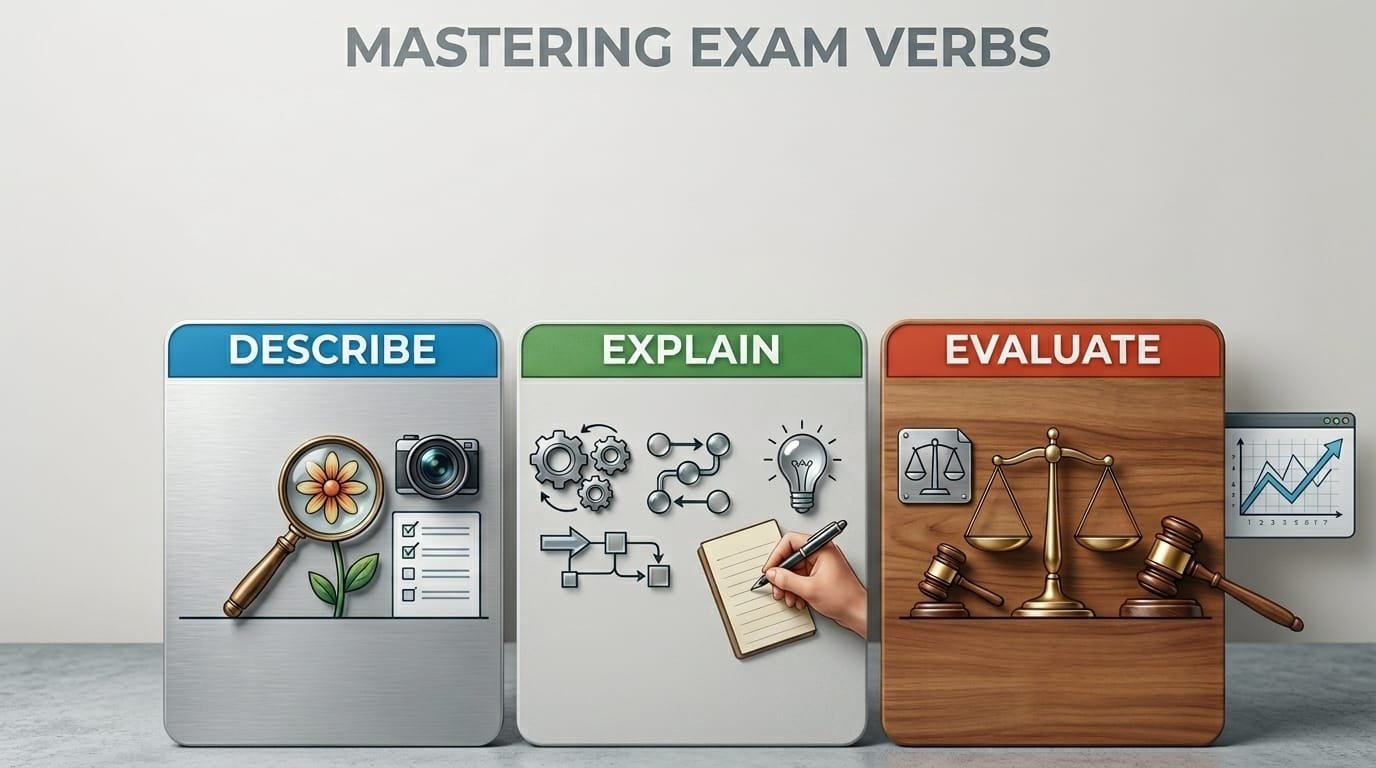
- Mark Scheme Analysis: Studying the specific vocabulary (command words) required by examiners, such as the difference between “Describe,” “Explain,” and “Evaluate.”
- Error Logging: Maintaining a “Black Book” of every mistake made in practice papers. An A* student does not just correct a mistake; they categorize why the mistake happened (e.g., “misread the question,” “lack of content knowledge,” or “calculation error”).
By the time the final month arrives, the A* student is no longer “studying” in the traditional sense. They are “refining” a performance that has already been rehearsed dozens of times through simulated testing.
Final Summary
The difference between average and high-scoring students is rarely intelligence. It is usually a structured revision strategy built on active recall, exam practice, and consistent feedback from mark schemes. When these habits are combined with consistent revision schedules and modern digital tools, exam preparation becomes efficient and less stressful.
Research published in Psychological Science shows that retrieval practice can improve long-term retention by up to 50%, which is why the most effective revision strategies prioritize active recall over passive reading.
Frequently Asked Questions
How many hours should I revise for IGCSE or A-Level exams?
Most successful students revise between 2–4 hours per day for IGCSE and 3–5 hours per day for A-Level subjects during the main revision period. However, the key factor is not the number of hours but the effectiveness of the revision techniques used, such as active recall and past paper practice.
When should students start revising for IGCSE and A-Level exams?
Ideally, students should begin structured revision three to four months before their exams. Starting early allows enough time to review concepts, practice past papers, and identify weak areas without relying on last-minute cramming.
What revision techniques do top students use?
High-scoring students typically use techniques such as active recall, spaced repetition, past paper practice, and concept explanation. These methods strengthen long-term memory and improve exam performance.
Is studying for long hours the best way to improve exam grades?
Not necessarily. Research shows that focused, high-quality study sessions are more effective than long hours of passive reading. Structured revision with clear goals tends to produce better results.